
Description
Book Details
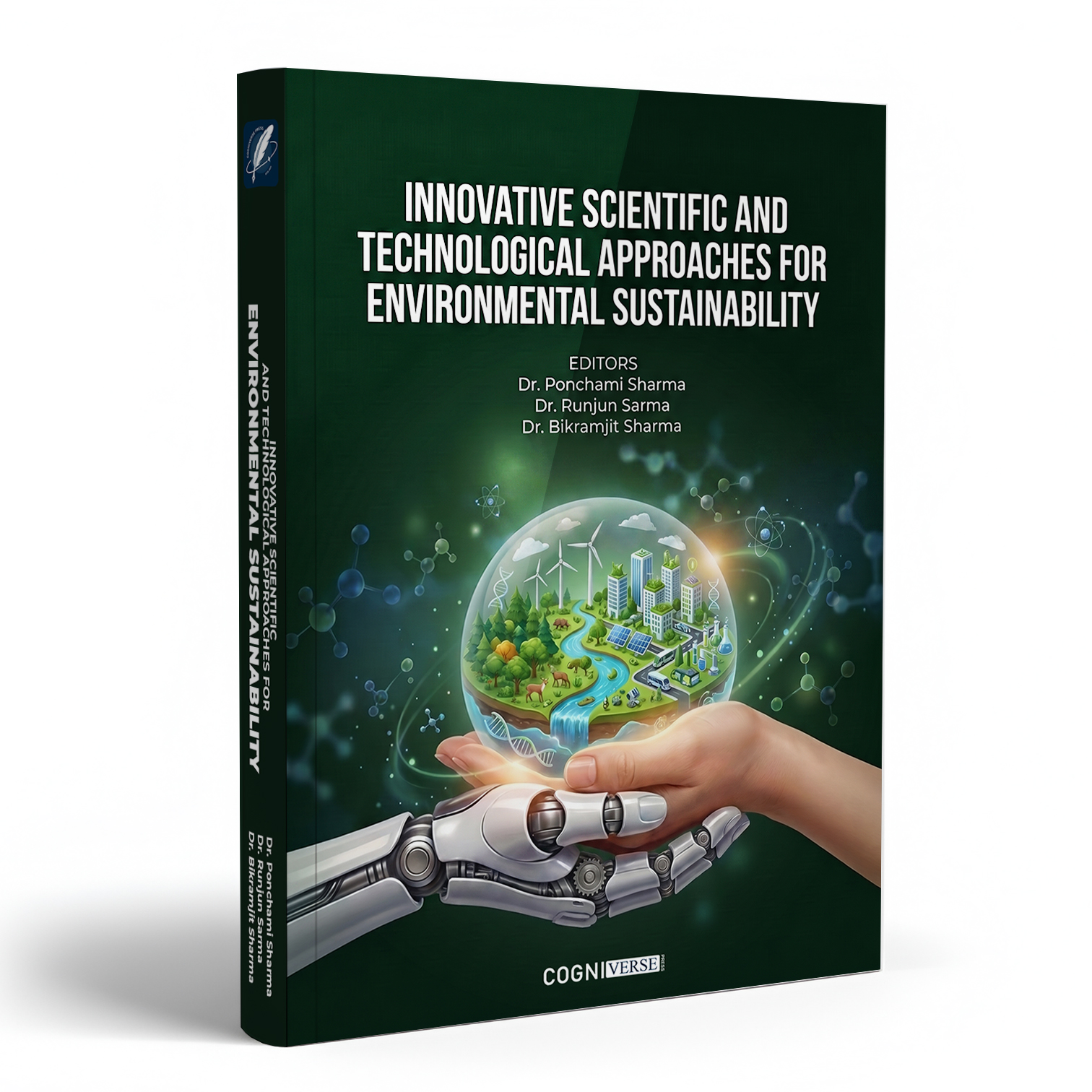
Title: Innovative Scientific and Technological Approaches for Environmental Sustainability
Editors:
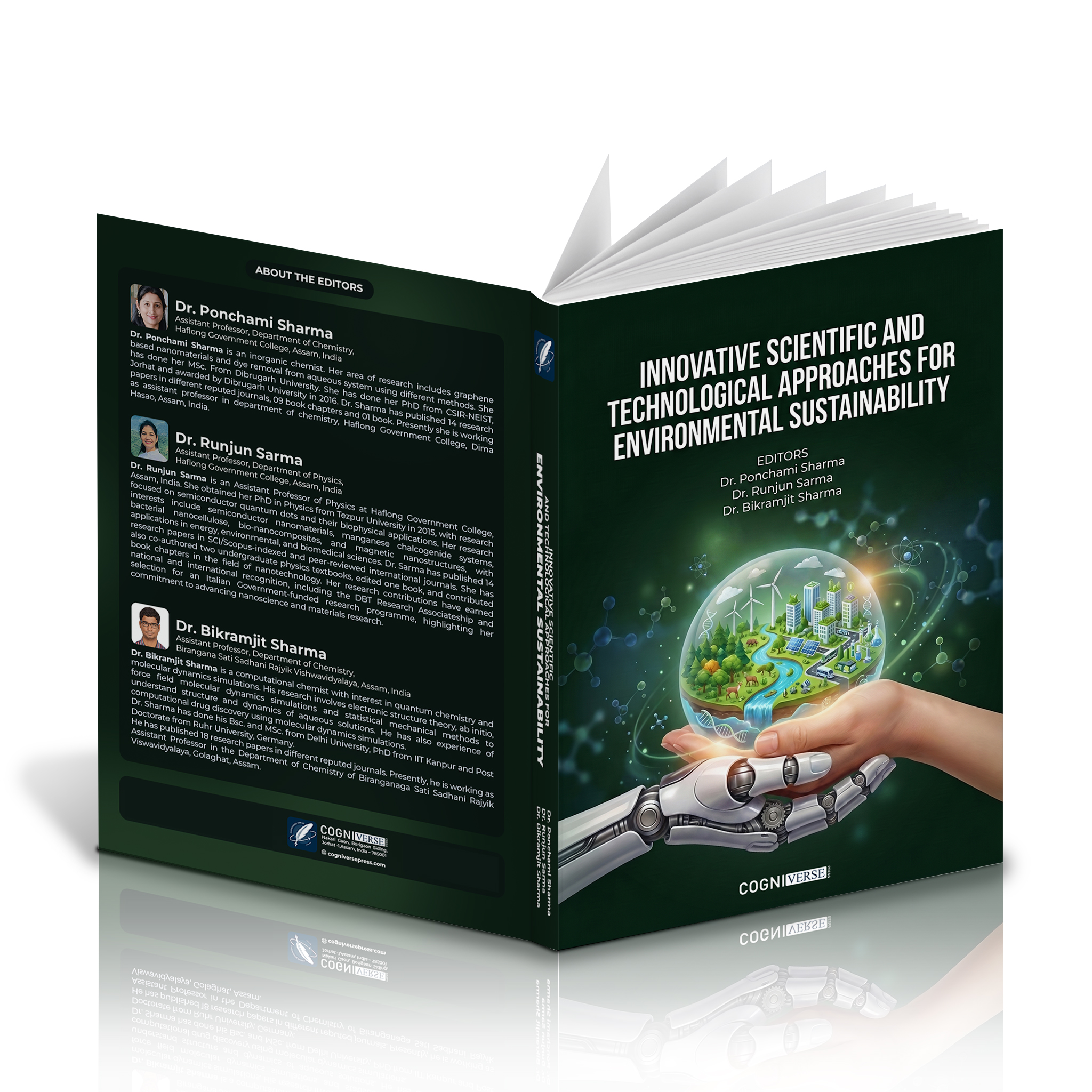
- Dr. Ponchami Sharma, Assistant Professor, Department of Chemistry, Haflong Government College, Assam, India
- Dr. Runjun Sarma, Assistant Professor, Department of Physics, Haflong Government College, Assam, India
- Dr. Bikramjit Sharma, Assistant Professor, Department of Chemistry, Birangana Sati Sadhani Rajyik Vishwavidyalaya, Assam, India
Publisher: Cogniverse Press, Jorhat, Assam, India
DOI: https://doi.org/10.5281/zenodo.21686367
ISBN (Print): 978-93-47652-20-2
e-ISBN (Digital): 978-93-47652-26-4
Preface
Environmental sustainability has become one of the defining challenges of the twenty-first century as rapid industrialization, urbanization, climate change, environmental degradation, and depletion of natural resources continue to threaten ecological balance. Addressing these interconnected issues requires innovative scientific thinking, technological advancement, and multidisciplinary collaboration among researchers, policymakers, and practitioners.
Innovative Scientific and Technological Approaches for Environmental Sustainability presents seven scholarly chapters that explore contemporary solutions for achieving sustainable development through scientific innovation. The volume highlights research in ecological restoration, biodegradable materials, electronic waste recycling, microbial biotechnology, renewable energy, environmental remediation, and advanced materials for pollution control.
The opening chapter examines regeneration patterns in jhum cultivation areas of Dima Hasao, Assam, emphasizing ecological succession, indigenous knowledge, agroforestry, and sustainable land management. The second chapter discusses biodegradable food packaging technologies as environmentally friendly alternatives to conventional plastics through the use of natural polymers, biocomposites, and intelligent packaging systems.
The third chapter focuses on aluminum recovery from electronic waste and demonstrates how  urban mining and recycling contribute to climate change mitigation, energy conservation, and circular resource utilization. The fourth chapter explores plant–microbe interactions, rhizosphere engineering, biofertilizers, and sustainable agricultural practices that improve soil health while reducing dependence on synthetic chemicals.
Subsequent chapters examine India’s transition towards renewable energy and sustainable development, advanced nanomaterials for environmental remediation, and functionalized mesoporous materials for the removal of toxic heavy metals from contaminated water. Together, these studies illustrate how modern scientific research can generate practical and environmentally responsible solutions.
By integrating concepts from ecology, biotechnology, materials science, renewable energy, waste management, and environmental engineering, this book demonstrates that sustainable development depends upon interdisciplinary collaboration, scientific innovation, responsible resource management, and respect for indigenous knowledge systems. The editors hope that this volume will serve as a valuable academic resource while inspiring future research and environmentally responsible decision-making.
Acknowledgement
The editors express their sincere gratitude to all contributing authors whose scholarly research and commitment to environmental sustainability form the foundation of this volume. Their diverse expertise has enriched the book with contemporary scientific knowledge and practical solutions for addressing global environmental challenges.
Special appreciation is extended to the peer reviewers for their constructive comments, careful evaluation, and valuable recommendations, which significantly enhanced the scientific quality, organization, and clarity of the chapters.
The editors acknowledge the dedicated efforts of the publishing team at Cogniverse Press for their continuous guidance, editorial support, and professional assistance throughout the publication process.
Heartfelt thanks are offered to family members, friends, and well-wishers for their encouragement, patience, and unwavering support during the preparation of this volume.
Finally, the editors recognize the broader scientific community whose continued efforts in green technologies, environmental conservation, and sustainable development inspire ongoing research dedicated to protecting the planet for future generations.
Key Themes
- Environmental Sustainability
- Climate Change Mitigation
- Ecological Restoration
- Jhum Cultivation and Indigenous Knowledge
- Biodegradable Food Packaging
- Electronic Waste Recycling
- Circular Economy
- Plant–Microbe Interactions
- Sustainable Agriculture
- Renewable Energy Technologies
- Environmental Remediation
- Nanotechnology for Pollution Control
- Heavy Metal Removal
- Green Materials
- Water Purification Technologies
Table of Contents
Chapter 1: Regeneration Pattern Abundance in Jhum Cultivation Areas of Dima Hasao, Assam, India
Author: Dr. Ron Kemprai
Chapter 2: Emerging Biodegradable Materials for Food Packaging
Authors: Bhargavi Pathak, Alinaj Yasin, Anurag Kashyap
Chapter 3: Recycling Aluminum from E-Waste: A Sustainable Approach to Mitigate Climate Change
Authors: Lakshmi K. Singh, M. K. Singh, Bishnu P. Koiry
Chapter 4: Plant–Microbe Interactions and Rhizosphere Engineering for Sustainable Mitigation of Abiotic Stress under Climate Change
Authors: Dr. Saurov Jyoti Roy, Himasree Sarma
Chapter 5: Transforming Energy Systems: The Role of Renewable Energy and Clean Technology
Author: Jyoti Prasad Roy Choudhury
Chapter 6: India’s Green Odyssey: Reimagining the Renewable Energy Landscape (2025–2026)
Authors: Deva Pratim Mahanta, Bandita Choudhury, Upakul Mahanta
Chapter 7: Functionalized Mesoporous Materials for the Advanced Remediation of Toxic Heavy Metals from Aqueous Solutions
Authors: Sushanta Kumar Roy, Debajani Dutta

Reviews
There are no reviews yet.