
Description
Book Details
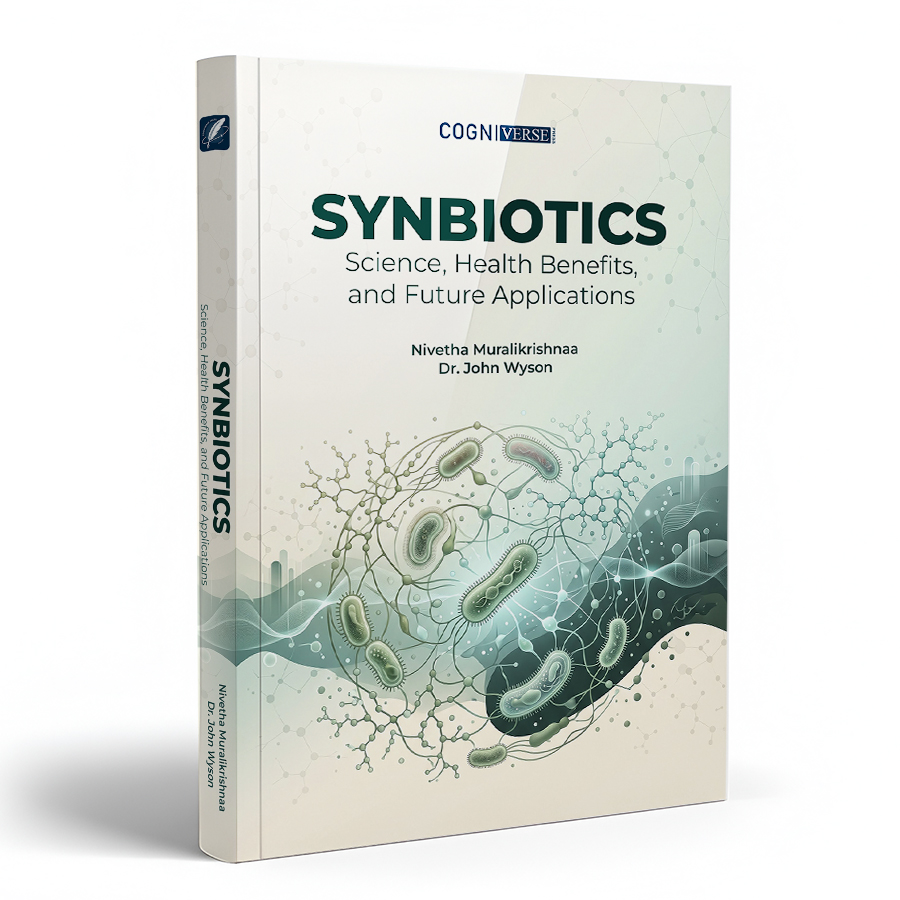
- Title: SYNBIOTICS – Science, Health Benefits, and Future Applications
- Author(s): Nivetha Muralikrishnaa, Dr. John Wyson
- Publisher: Cogniverse Press
- Edition: First Edition
- Publication Date: September, 2026
- Total Pages: 77
- ISBN: 978-81-68073-51-7
- e-ISBN: 978-81-68073-52-4
- DOI: https://doi.org/10.5281/zenodo.23044407
Preface
Synbiotics represent an important development in functional food and microbiome research. They combine live microorganisms with substrate(s) selectively utilized by host microorganisms and are intended to confer a health benefit. The modern scientific definition recognizes complementary and synergistic synbiotics, allowing researchers to investigate both independently functioning components and combinations designed to work cooperatively.
This book introduces synbiotic science from a food-processing and nutrition perspective. It discusses microbial selection, prebiotic substrates, compatibility, processing technologies, product development, gastrointestinal and immune health, metabolic and mental well-being, analytical methods, clinical evaluation, safety, regulation, and sustainability. The manuscript emphasizes that the word synbiotic should not be used simply for any mixture of a probiotic and a fibre. The formulation must be characterized and its benefit demonstrated for the intended host and outcome.
The book is designed as an academic foundation for students, research scholars, food technologists, nutrition professionals, and product developers. Since the evidence base continues to evolve, the final manuscript should be checked against current primary studies, regulatory guidance, and the latest consensus documents before publication.
Intended Audience
The book is designed as an academic foundation for students, research scholars, food technologists, nutrition professionals, and product developers.
Table of Contents
Chapter 1. Introduction to Synbiotics
- 1.1. Emergence of Synbiotic Research
- 1.2. Why Combination Approaches Matter
- 1.3. Synbiotics as Functional Foods
- 1.4. Scientific Opportunities
- 1.5. Scope and Organisation
Chapter 2. Probiotics and Prebiotics: Foundations of Synbiotic Science
- 2.1. Probiotic Microorganisms
- 2.2. Prebiotic Substrates
- 2.3. Complementary Interactions
- 2.4. Synergistic Interactions
- 2.5. Evidence Requirements
Chapter 3. Definition, Classification, and Mechanisms of Synbiotic Action
- 3.1. Updated Scientific Definition
- 3.2. Complementary Synbiotics
- 3.3. Synergistic Synbiotics
- 3.4. Microbial Ecology
- 3.5. Host-Microbe Signalling
Chapter 4. Microbial Selection, Substrate Compatibility, and Formulation Principles
- 4.1. Strain Selection
- 4.2. Substrate Selection
- 4.3. Compatibility Testing
- 4.4. Dose and Delivery
- 4.5. Formulation Challenges
Chapter 5. Food Processing and Product Development of Synbiotic Foods
- 5.1. Dairy-Based Foods
- 5.2. Plant-Based Beverages
- 5.3. Cereal and Millet Products
- 5.4. Powders and Instant Mixes
- 5.5. Bars and Bakery Foods
- 5.6. Fermented Vegetables and Legumes
- 5.7. Encapsulation
- 5.8. Sensory Quality
- 5.9. Stability and Packaging
- 5.10. Scale-Up and Quality Control
Chapter 6. Synbiotics in Gastrointestinal and Immune Health
- 6.1. Gastrointestinal Homeostasis
- 6.2. Barrier Function
- 6.3. Immune Modulation
- 6.4. Constipation and Bowel Function
- 6.5. Diarrhoeal Conditions
- 6.6. Clinical Interpretation
Chapter 7. Synbiotics in Metabolic Health, Mental Well-Being, and Healthy Ageing
- 7.1. Glucose and Lipid Metabolism
- 7.2. Body Weight and Inflammation
- 7.3. Gut-Brain Communication
- 7.4. Stress and Mood
- 7.5. Healthy Ageing
- 7.6. Personalised Nutrition
Chapter 8. Analytical Characterisation, Sensory Evaluation, and Clinical Trials
- 8.1. Identity and Viability
- 8.2. Prebiotic Utilisation
- 8.3. Microbiological and Chemical Testing
- 8.4. Sensory Evaluation
- 8.5. Trial Design
- 8.6. Statistical Analysis
Chapter 9. Safety, Regulation, Sustainability, and Future Research Needs
- 9.1. Safety Assessment
- 9.2. Contamination and Quality
- 9.3. Regulatory Frameworks
- 9.4. Consumer Communication
- 9.5. Sustainability
- 9.6. Research Gaps
Chapter 10. Conclusion and Future Perspectives
- 10.1. Main Conclusions
- 10.2. Implications for Food Innovation
- 10.3. Future Research
- 10.4. Final Perspective


Reviews
There are no reviews yet.