
Description
Book Details
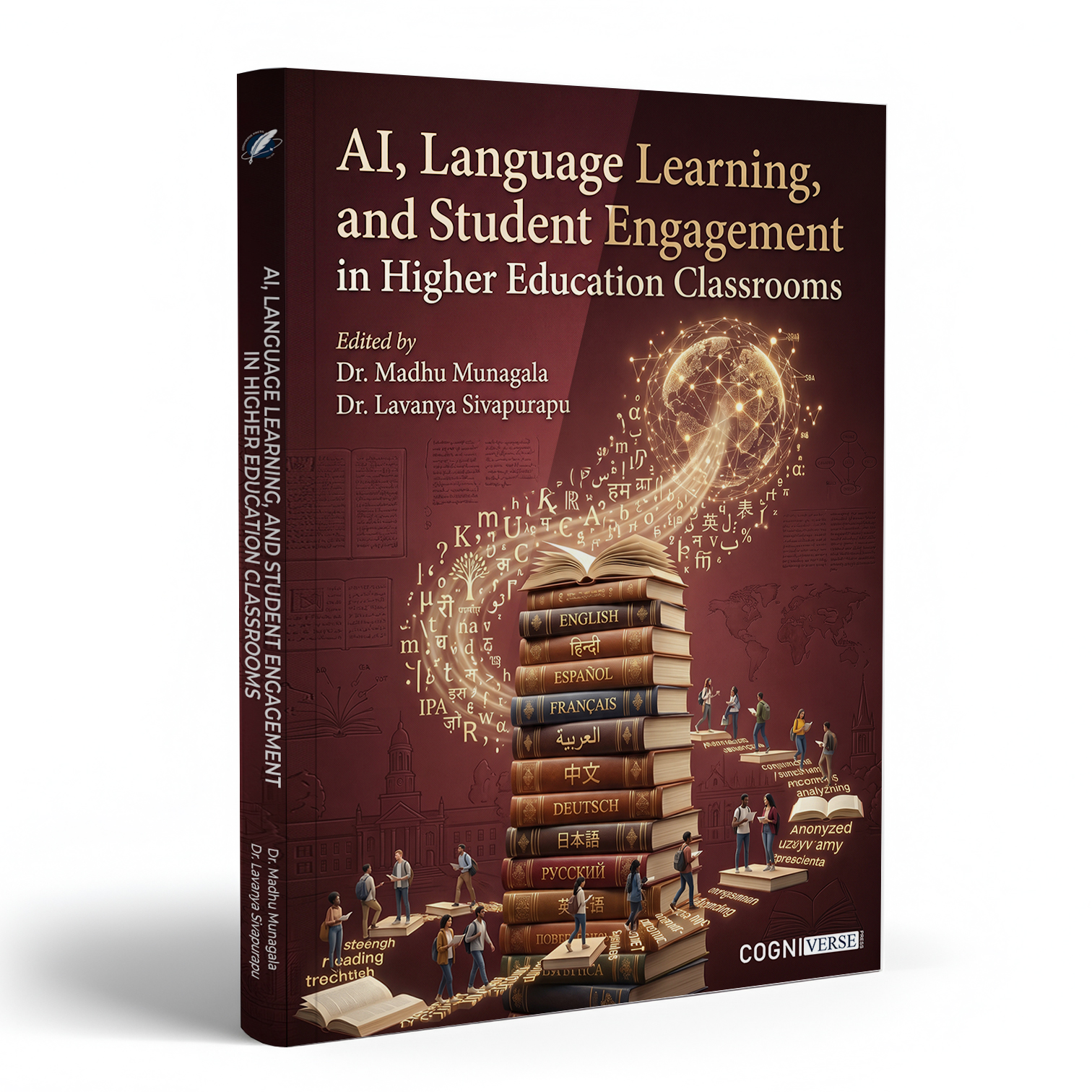
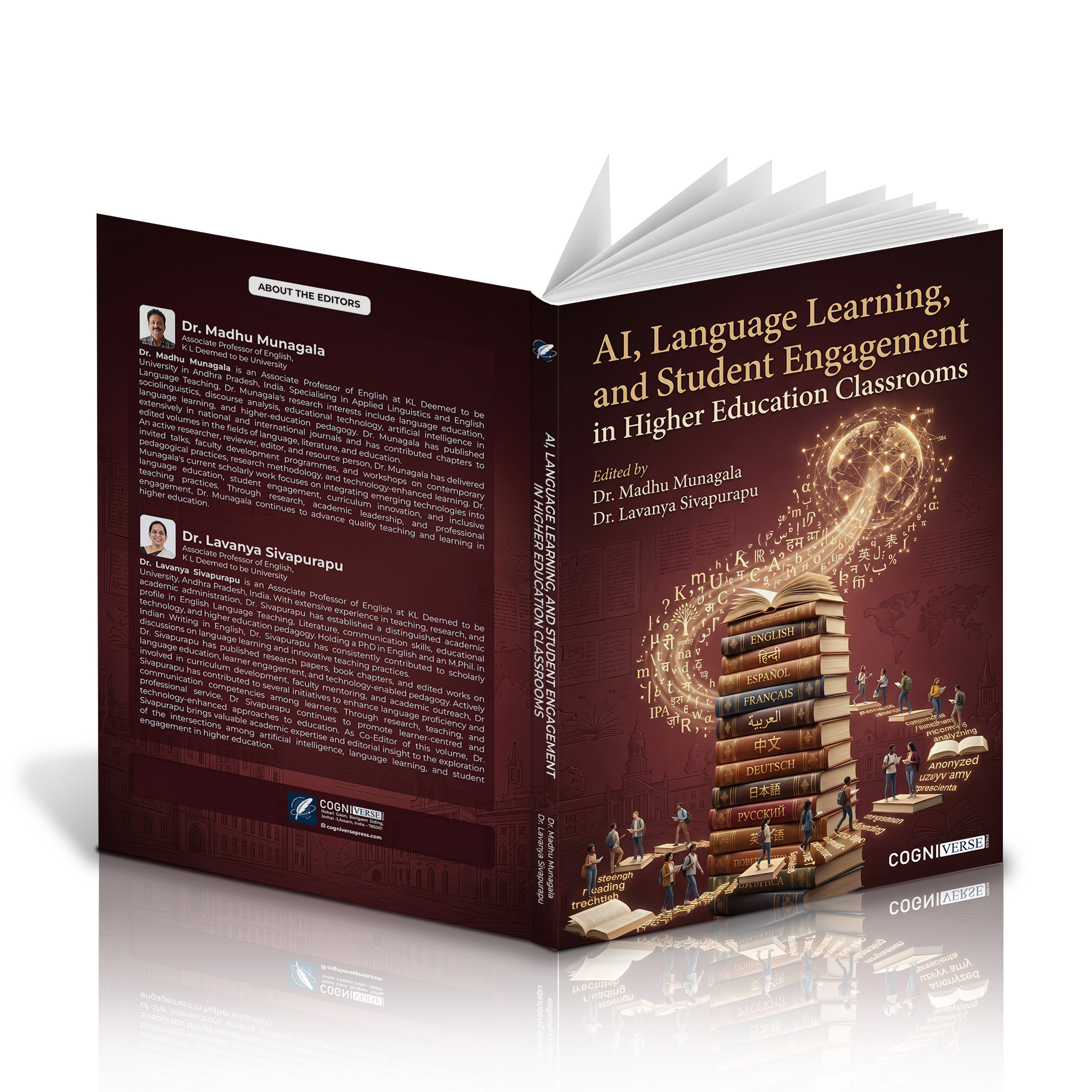
Title: AI, Language Learning, and Student Engagement in Higher Education Classrooms
Type: Peer Reviewed Edited Volume
Editors: Dr. Madhu Munagala, Dr. Lavanya Sivapurapu
Publisher: Cogniverse Press, Jorhat, Assam, India
First Edition: June 2026
DOI: 10.5281/zenodo.20759890
ISBN: 978-81-686963-8-9 (Print Edition)
e-ISBN: 978-81-686963-9-6 (Digital Edition)
Cover Designing: Cogniverse Press Digital Team
Copyright: © Authors
Editors
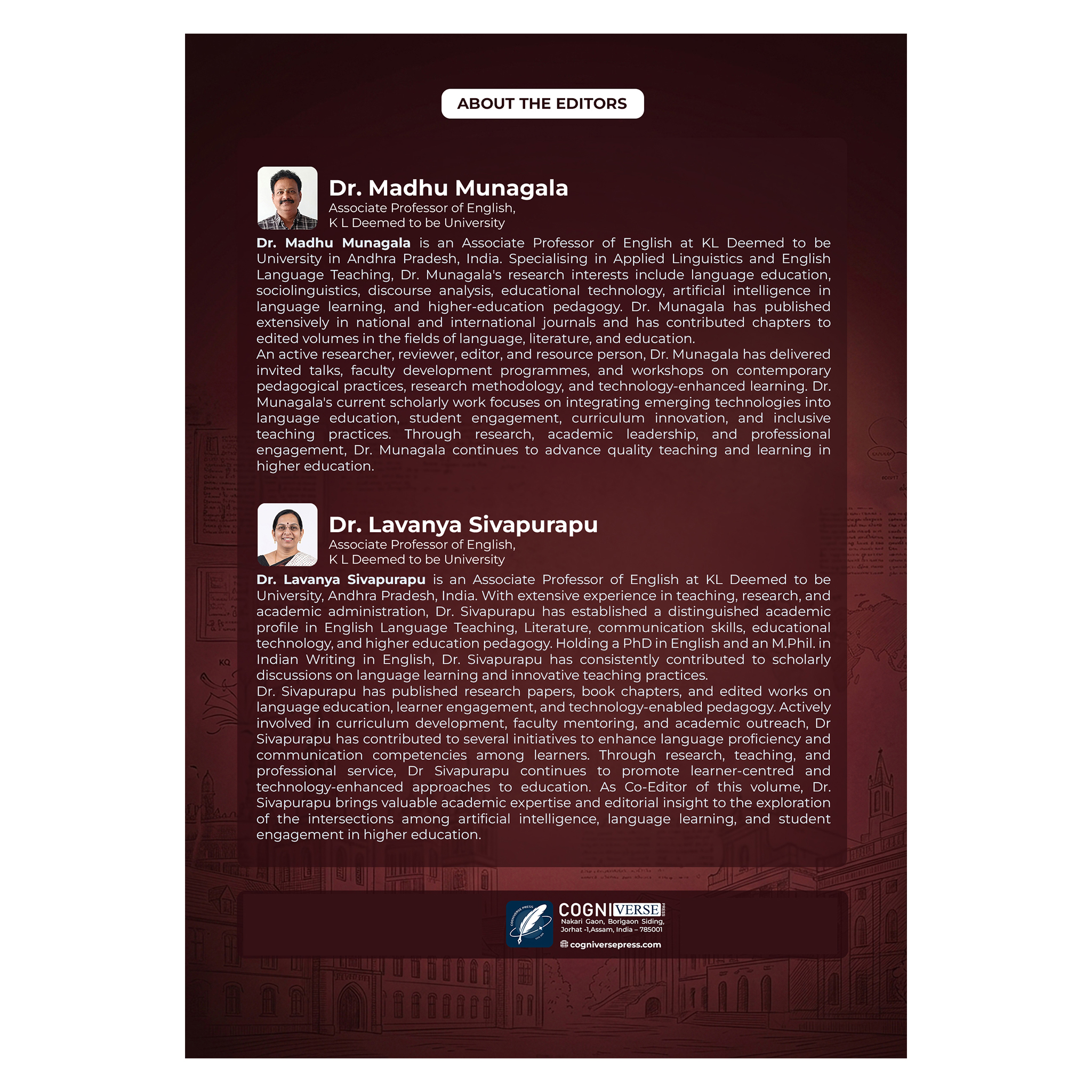
- Dr. Madhu Munagala – Associate Professor of English, K L Deemed to be University, Andhra Pradesh, India
- Dr. Lavanya Sivapurapu – Associate Professor of English, K L Deemed to be University, Andhra Pradesh, India
Publisher Information
Cogniverse Press
Nakari Gaon, Borigaon Siding, Jorhat – 1, Assam, India
Website: cogniversepress.com
Email: cogniversepress@gmail.com
Foreword
The rapid advancement of Artificial Intelligence (AI) has brought transformative changes across education, particularly in language teaching and learning. AI-powered technologies are redefining traditional pedagogical approaches by enabling personalised learning, enhanced classroom interaction, and greater learner engagement. As higher education institutions embrace these innovations, scholarly exploration of AI’s pedagogical implications has become increasingly important.
This volume presents a comprehensive examination of AI-assisted language learning, exploring themes such as technology-enhanced classroom interaction, AI-mediated discourse, learner motivation, curriculum innovation, human–AI collaboration, and ethical issues including equity and bias. While recognising the transformative capabilities of tools such as ChatGPT, Learning Management Systems, and other educational technologies, the contributors also emphasise the continuing importance of human agency, critical thinking, and sound pedagogical practice.
A distinguishing strength of this collection is its focus on student engagement as the foundation of effective learning. The chapters demonstrate how thoughtful integration of AI can foster participation, collaboration, motivation, and meaningful learning experiences while encouraging educators to critically reflect on the opportunities and challenges associated with emerging technologies.
This scholarly and practice-oriented volume provides valuable insights for researchers in Applied Linguistics, English Language Teaching, Educational Technology, and Higher Education Studies, while also serving language teachers, curriculum developers, and educational administrators seeking to understand the evolving relationship between artificial intelligence and language education.
Prof. Sarada Thallam
Department of English
Sri Venkateswara University
Tirupati, Andhra Pradesh, India
Preface
The emergence of Artificial Intelligence has fundamentally transformed higher education by reshaping how knowledge is created, delivered, and experienced. In language education, AI-powered technologies have opened new possibilities for personalised learning, learner autonomy, classroom interaction, and student engagement. This edited volume has been developed to examine these developments through contemporary research and critical scholarly perspectives.
AI, Language Learning, and Student Engagement in Higher Education Classrooms brings together researchers, educators, and practitioners to explore the intersection of artificial intelligence, language education, and student engagement. The volume investigates AI-supported language learning across diverse educational contexts while examining technology-enhanced classroom interaction, AI-mediated discourse, curriculum innovation, learner motivation, and the integration of educational technologies such as ChatGPT and Learning Management Systems.
Several chapters also address broader concerns relating to equity, bias, ethics, and responsible AI adoption in educational environments. The contributors demonstrate that meaningful learning is achieved not merely through technological innovation but through pedagogically sound practices that encourage interaction, collaboration, participation, and critical thinking.
The editors hope this volume will serve as a valuable resource for researchers, teacher educators, language teachers, curriculum designers, postgraduate students, and policymakers interested in understanding the evolving relationship between artificial intelligence and language education. It is also intended to stimulate further research and scholarly dialogue on creating engaging, inclusive, and innovative learning environments in higher education.
Editors
Acknowledgement
The editors express sincere gratitude to all contributing authors whose scholarly work, academic rigour, and diverse perspectives have enriched this volume and advanced contemporary discussions on artificial intelligence, language learning, and student engagement.
Heartfelt appreciation is extended to the reviewers and academic peers whose constructive feedback significantly enhanced the quality and scholarly merit of the chapters. Special thanks are also offered to Prof. Sarada Thallam for contributing the Foreword and for her valuable academic encouragement.
The editors gratefully acknowledge K L Deemed to be University and its Department of English for fostering an academic environment that encourages research, innovation, and scholarly excellence. Appreciation is also extended to Ms. Yeshita Kothari for her dedicated assistance in proofreading, editing, and improving the overall quality and readability of the manuscript.
Finally, sincere thanks are conveyed to Cogniverse Press for its professional guidance, cooperation, and commitment to publishing quality academic scholarship. The editors hope this volume will serve as an important resource for researchers, educators, curriculum designers, postgraduate students, and policymakers while encouraging continued research and dialogue in AI-assisted language education.
Editors
Key Themes
- Artificial Intelligence in Higher Education
- AI-Assisted Language Learning
- Student Engagement and Motivation
- ChatGPT and Generative AI in Education
- Technology-Enhanced Language Teaching
- Learning Management Systems (LMS)
- Human–AI Collaboration in ELT
- Curriculum Innovation
- Digital Pedagogy and Classroom Interaction
- AI Ethics, Equity, and Bias
- Educational Technology
- Applied Linguistics and English Language Teaching
Table of Contents
Chapter 1: Architects of Experience: Navigating the Shift to AI-Enhanced Language Learning Environments
Author: Dr. Severine Pinto
Chapter 2: AI-Assisted Spanish Learning and Student Engagement in Multilingual Slovak University Classrooms
Authors: Mr. Vivek Chaturvedi, doc. Mgr. Mária Spišiaková
Chapter 3: Technology-enhanced Classroom Interaction
Author: Dr. Rohitash Kumar
Chapter 4: AI Tools (ChatGPT, LMS, EdTech) in Language Education
Authors: Dr. A. Manjula, Gnanasankaran Natarajan, Dr. Sundaravadivazhagan Balasubramanian, Dr. Karuppasamy Anthony
Chapter 5: Redesigning Language Tasks for the AI Era: A Self-Determination Theory Approach to Fostering Engagement and Discourse Through ChatGPT
Author: Mohammad Fazeli
Chapter 6: Human and Artificial Intelligence Collaboration in ELT Classrooms: A Collaborative Pedagogical Model for Enhancing Student Engagement in Higher Education
Author: Mohammad Asad
Chapter 7: AI as a Catalyst for Interactive Classroom Discourse: Reshaping Language Learning and Communication in Contemporary Classrooms
Authors: Dr. AC. Priya Ranjani, Dr. R. D. Sathiya
Chapter 8: Cognitive Engagement and Learner Motivation through Digital Pedagogy in English Language Learning
Authors: Audrey Correa, Pranit Shinde
Chapter 9: Leveraging ChatGPT to Enhance Student Engagement and Motivation in English Language Classrooms: A Qualitative Study in Hyderabad Higher Education Contexts
Authors: Pedaveti Julia, Dr. B. Jeyanthi
Chapter 10: Beyond Passive Reading: Integrating Literary Criticism as a Catalyst for Curriculum Innovation in Language Education
Author: D. Vaidehi
Chapter 11: Bridging the Divide: Context, Equity and Bias in AI-Assisted Language Learning
Author: M. Bernice Bala
Chapter 12: Generative AI in Reproduction of Genre Conventions: Gothic, Science Fiction, and Fantasy Narratives
Authors: Ms. K. Sunanda, Dr. G. Loganayaki
Chapter 13: AI-Mediated Dialogic Pedagogy: Enhancing Student Engagement in English Language Classrooms Through Human–AI Collaboration
Author: Goshika Srikanth
Chapter 14: AI-Mediated Classroom Discourse and Student Engagement: A Media-Communication Framework for Higher Education Language Learning
Authors: Dr. Priya Sachdeva, Dr. Archan Mitra


Reviews
There are no reviews yet.