
Description
Book Details
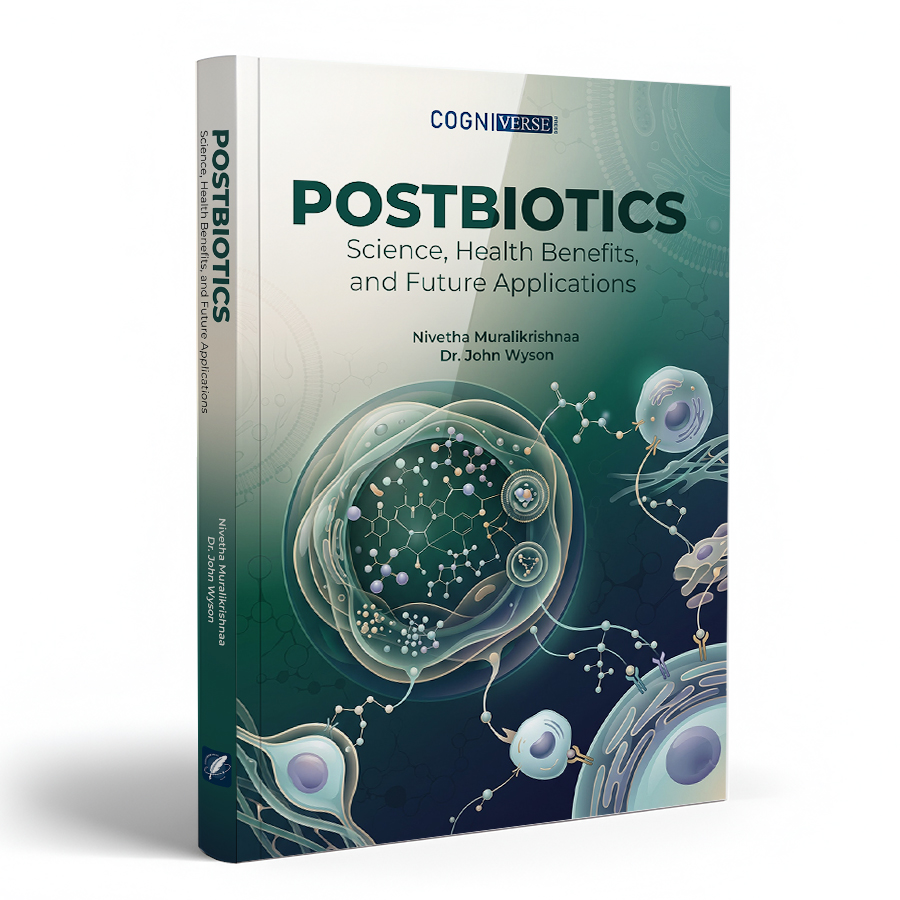
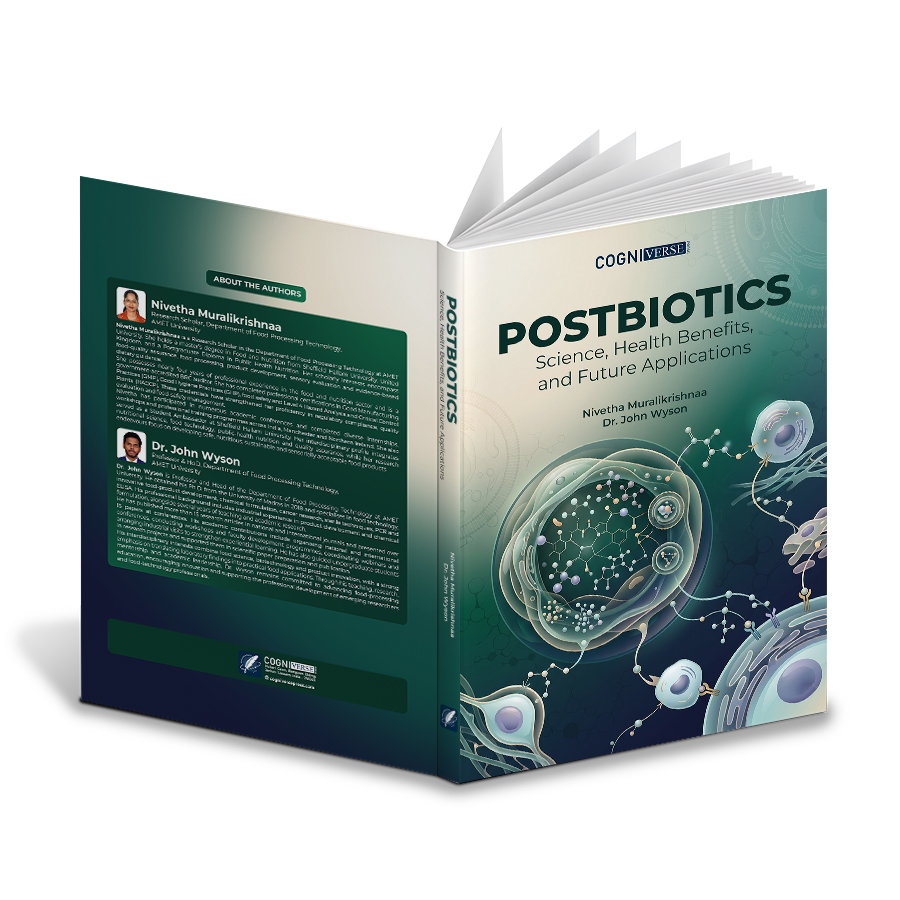
Title: POSTBIOTICS – Science, Health Benefits, and Future Applications
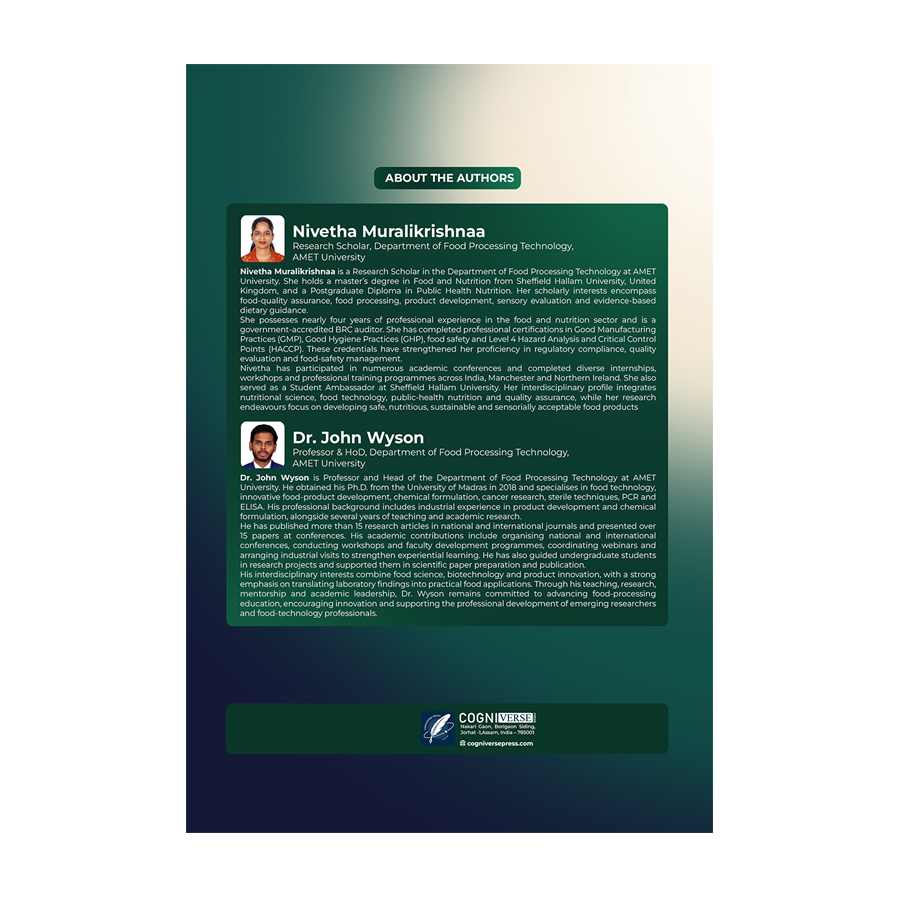
Author(s): Nivetha Muralikrishnaa, Dr. John Wyson
Publisher: Cogniverse Press
ISBN: 978-81-68073-49-4
e-ISBN: 978-81-68073-50-0
DOI: https://doi.org/10.5281/zenodo.23044329
Edition: First Edition
Publication Date: September, 2026
Preface
Postbiotics are an emerging group of preparations containing inanimate microorganisms and/or their components that provide a demonstrated health benefit to the host. Their growing relevance is linked to the limitations of live microbial products, including sensitivity to heat, oxygen, acidity, moisture, and storage conditions. This book presents an evidence-informed introduction to postbiotic science from the perspectives of microbiology, food processing, nutrition, functional food development, safety, and clinical evaluation. It distinguishes established findings from mechanistic hypotheses and emphasizes that a postbiotic claim requires appropriate characterization, safety assessment, and evidence in the intended host.
Table of Contents
Chapter 1. Introduction to Postbiotics
- 1.1. The emergence of postbiotic science
- 1.2. Why postbiotics matter in food science
- 1.3. Probiotics and postbiotics
- 1.4. Scientific and commercial relevance
- 1.5. Scope of the book
Chapter 2. Definition, Classification, and Core Concepts
- 2.1. The consensus definition
- 2.2. Inanimate cells and cell components
- 2.3. Metabolites and related preparations
- 2.4. Historical terminology
- 2.5. Evidence required for classification
Chapter 3. Sources, Composition, and Mechanisms of Action
- 3.1. Microbial sources
- 3.2. Cell-wall structures
- 3.3. Microbial metabolites
- 3.4. Barrier and immune interactions
- 3.5. Communication beyond the gut
Chapter 4. Production and Processing Technologies
- 4.1. Starting culture selection
- 4.2. Thermal inactivation
- 4.3. High-pressure and non-thermal methods
- 4.4. Drying and stabilisation
- 4.5. Process validation
Chapter 5. Food Applications and Product Development
- 5.1. Functional ingredients
- 5.2. Dairy products
- 5.3. Plant-based beverages
- 5.4. Cereal and millet foods
- 5.5. Powders and sachets
- 5.6. Bars and bakery products
- 5.7. Fermented vegetables and legumes
- 5.8. Sensory evaluation
- 5.9. Stability and shelf life
- 5.10. Product claims
Chapter 6. Postbiotics in Gut and Immune Health
- 6.1. Intestinal homeostasis
- 6.2. Barrier function
- 6.3. Immune modulation
- 6.4. Gastrointestinal tolerance
- 6.5. Clinical evidence
Chapter 7. Metabolic Health, Skin Health, and Healthy Ageing
- 7.1. Metabolic regulation
- 7.2. Obesity and cardiometabolic risk
- 7.3. Skin and gut–skin connection
- 7.4. Healthy ageing
- 7.5. Personalised nutrition
Chapter 8. Analytical Characterisation and Clinical Evaluation
- 8.1. Identity and traceability
- 8.2. Confirmation of inactivation
- 8.3. Chemical and structural analysis
- 8.4. In vitro and preclinical models
- 8.5. Human trial design
- 8.6. Statistics and reporting
Chapter 9. Safety, Regulation, Sustainability, and Research Gaps
- 9.1. Safety assessment
- 9.2. Quality control
- 9.3. Regulatory considerations
- 9.4. Sustainability
- 9.5. Consumer trust
- 9.6. Research gaps
Chapter 10. Conclusion and Future Perspectives
- 10.1. Core principles
- 10.2. Food innovation opportunities
- 10.3. Future research
- 10.4. Final perspective
References



Reviews
There are no reviews yet.