
Description
Book Details
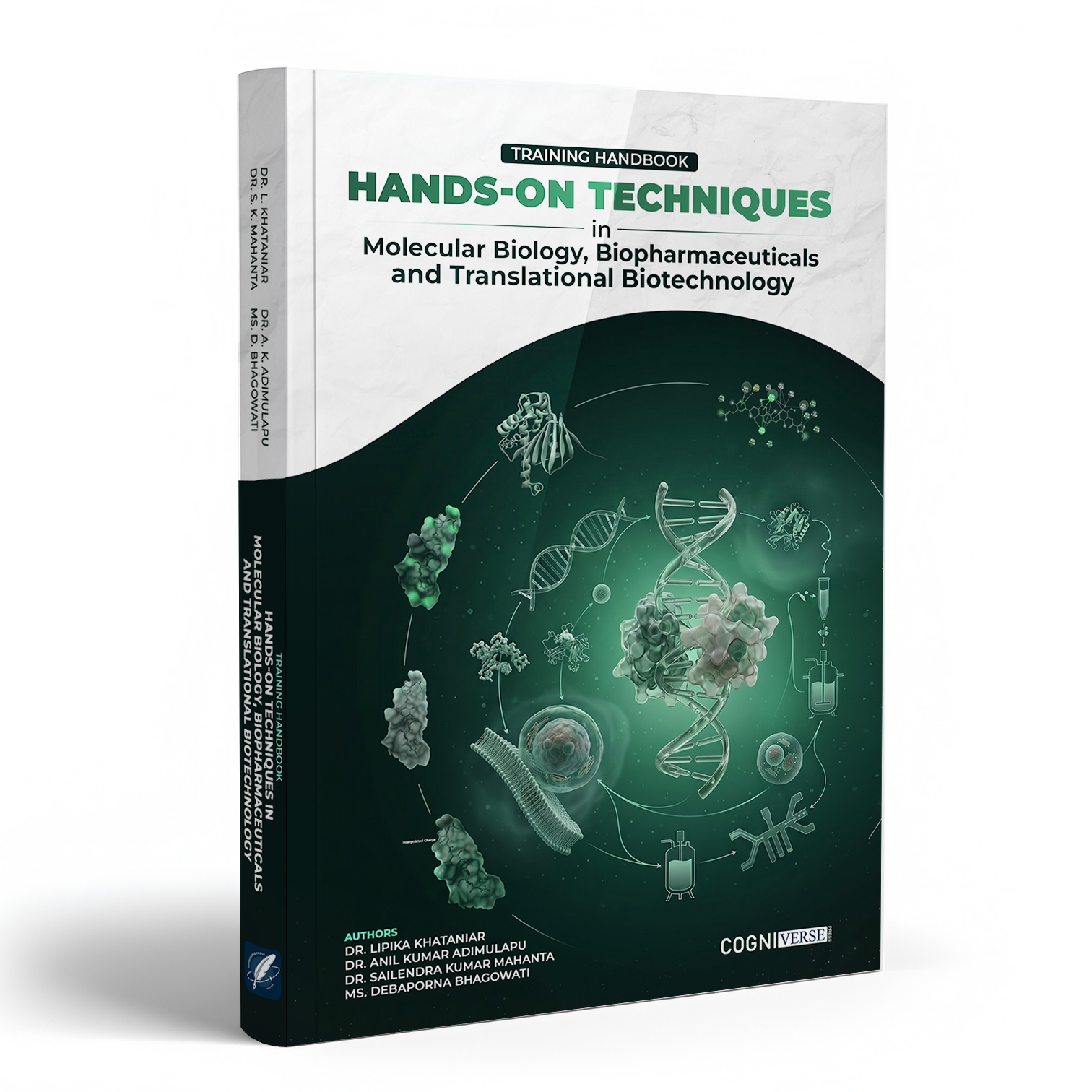
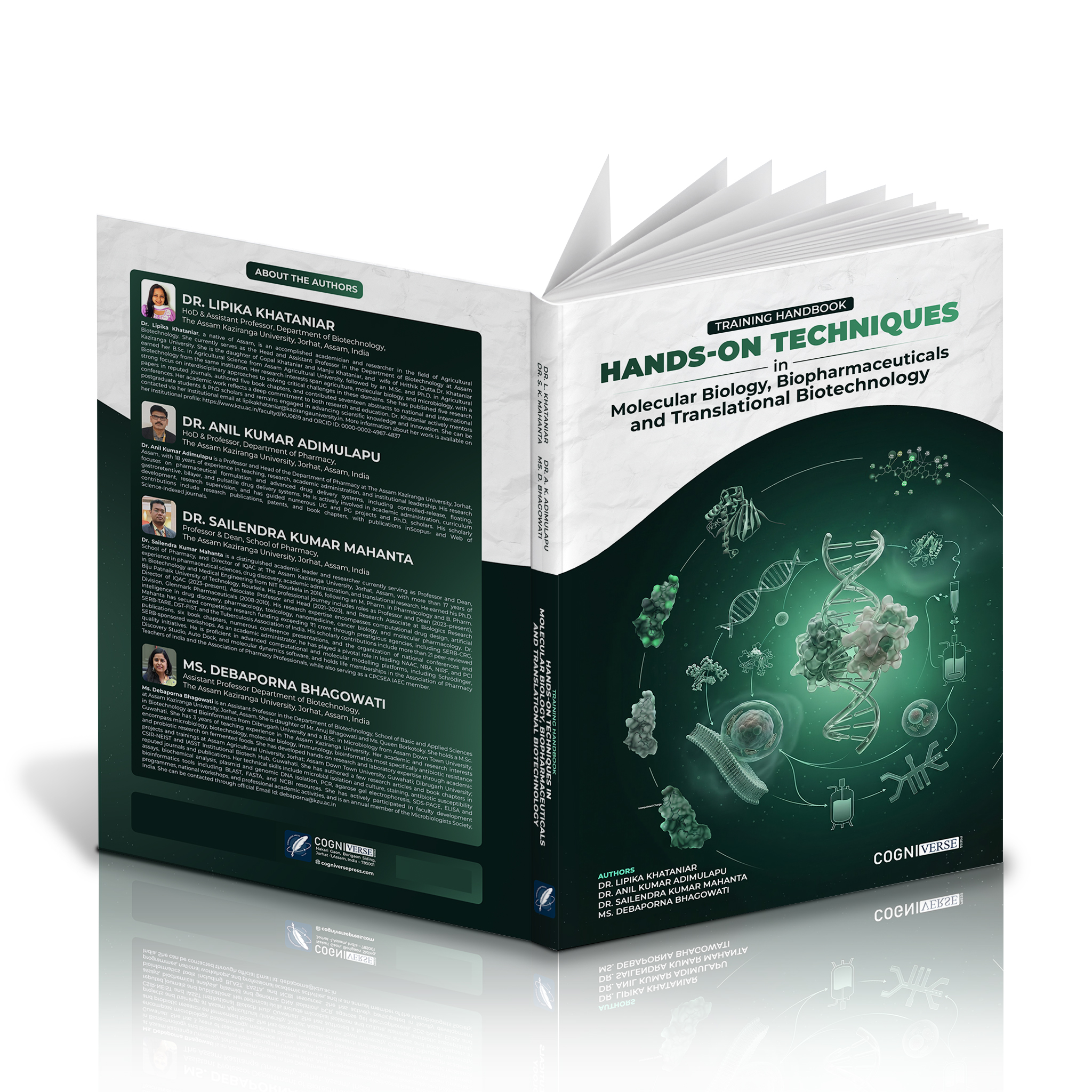
Title: Hands-on Techniques in Molecular Biology, Biopharmaceuticals and Translational Biotechnology
Type: Training Handbook
Authors:
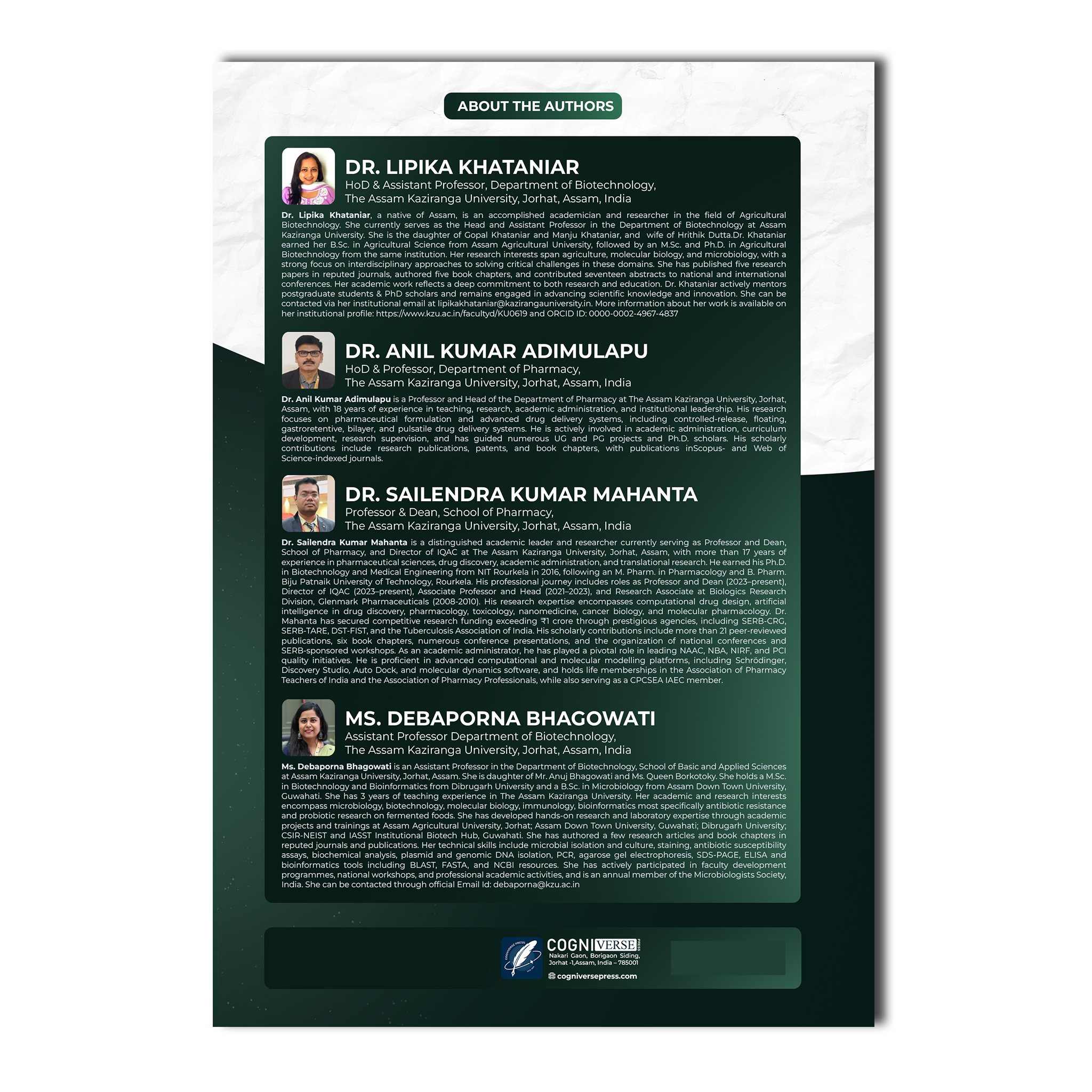
- Dr. Lipika Khataniar – Head and Assistant Professor, Department of Biotechnology, The Assam Kaziranga University, Jorhat, Assam
- Dr. Anil Kumar Adimulapu – Professor and Head, Department of Pharmacy, The Assam Kaziranga University, Jorhat, Assam
- Dr. Sailendra Kumar Mahanta – Professor and Dean, School of Pharmacy, and Director of IQAC, The Assam Kaziranga University, Jorhat, Assam
- Ms. Debaporna Bhagowati – Assistant Professor, Department of Biotechnology, School of Basic and Applied Sciences, The Assam Kaziranga University, Jorhat, Assam
Publisher: Cogniverse Press, Jorhat, Assam, India
First Edition: September 2026
ISBN: 978-81-68073-19-7 (Print Edition)
e-ISBN: 978-81-68073-20-3 (Digital Edition)
Published by: Cogniverse Press, Nakari Gaon, Borigaon Siding, Jorhat-1, Assam, India
Cover Designing: Cogniverse Press Digital Team
Copyright: © Authors
Website: cogniversepress.com
Email: cogniversepress@gmail.com
Disclaimer: The views, interpretations, and research findings presented in this publication are solely of the respective authors. The publisher bears no responsibility or liability for the accuracy, completeness, or validity of the content herein.
Preface
Scientific knowledge becomes truly meaningful when it can be explored, tested, and applied. In biotechnology, the journey from understanding a biological process to developing a diagnostic tool, therapeutic molecule, or biopharmaceutical product depends greatly on the ability to connect concepts with practical experimentation. This concept forms the foundation of the hands-on training on “Advances in Biopharmaceuticals and Translational Biotechnology”.
This book has been prepared to provide participants with direct exposure to selected experimental and computational techniques that form an integral part of contemporary molecular and translational research. Rather than treating individual techniques as isolated laboratory exercises, the training aims to demonstrate how different approaches can complement one another in addressing biological questions, from obtaining and analysing nucleic acids and proteins to detecting biomarkers and exploring potential molecular interactions through computational methods.
The practical sessions presented in this book encompass DNA isolation, Polymerase Chain Reaction (PCR), SDS-PAGE, ELISA, biomarker detection, molecular docking, and bioinformatics tools. These techniques have been carefully selected to represent different stages of a modern research workflow.
DNA isolation and PCR introduce participants to essential molecular biology procedures and nucleic acid analysis. SDS-PAGE provides practical insight into protein separation and analysis, while ELISA demonstrates the application of antigen–antibody interactions in research and diagnostic settings. The biomarker detection component further connects laboratory measurements with the identification and evaluation of biologically significant molecules.
The training also extends beyond conventional wet-laboratory methods through molecular docking and bioinformatics. These computational approaches provide participants with an introduction to the analysis of biological information and the exploration of biomolecular interactions.
A central objective of this book is to encourage participants to look beyond simply following a protocol. Each practical has been organized to promote an understanding of the principle, purpose, methodology, observations, interpretation, and applications of the technique. Attention has also been given to laboratory precautions and the importance of accuracy, reproducibility, and critical interpretation of experimental results.
This manual is intended for students, research scholars, academicians, laboratory professionals, and researchers from biotechnology, microbiology, biochemistry, molecular biology, pharmaceutical sciences, biomedical sciences, and allied disciplines. It is hoped that this book will remain a useful resource beyond the training programme and support participants in their future academic, research, and professional endeavours.
Authors
Table of Contents
Laboratory Safety Measures
Abbreviations
Unit 1. Molecular Docking using AutoDock 4.2.6
- Objective
- Learning Outcomes
- Principle
- Requirements
- Procedure
- Steps
- Analysis of Results using Discovery Studio Visualizer
- Observation
Unit 2. Separation of Protein by SDS-PAGE
- Objectives
- Learning Outcomes
- Principle
- Requirements
- Procedure
- Interpretation
- Observation
Unit 3. Isolation of Genomic DNA from Bacteria by CTAB Method
- Objectives
- Learning Outcomes
- Principle
- Requirements
- Solutions
- Procedure
- Notes
- Interpretation
- Observation
Unit 4. Polymerase Chain Reaction (PCR) Analysis of the DNA Sample
- Objectives
- Learning Outcomes
- Principle
- Requirements
- Procedure
- Interpretation
- Observation
Unit 5. Agarose Gel Electrophoresis of DNA
- Objectives
- Learning Outcomes
- Principle
- Requirements
- Solutions
- Procedure
- Interpretation
- Observation
Unit 6. Enzyme-Linked Immunosorbent Assay (ELISA)
- Objectives
- Learning Outcomes
- Principle
- Requirements
- Procedure
- Interpretation
- Precautions
- Observation
- Suggested Reading


Reviews
There are no reviews yet.